CSIF Ethiopia - First Biannual Report August 2025 – January 2026 Summary of Main Findings
CSIF Ethiopia II operates in a complex and evolving context. It is shaped by:
The June 2026 elections and related developments.
Ongoing regional security dynamics.
Tightening donor resources for governance and rights-based initiatives.
A developing regulatory environment affecting civic engagement.
These conditions increase risks for civil society but also reinforce the strategic importance of CSIF as a stabilising, adaptive funding platform. Conflict sensitivity, flexibility, and risk management are central to programme delivery, not add‐ons. With new funders and partners, this reporting period represents a startup and consolidation phase rather than full delivery. We are on track, with strong foundations established across governance, grant management, capacity development, and coordination. While outcome‐level change is still emerging, early evidence shows meaningful progress in organisational capacity, resilience, and collaboration, despite this highly constrained context.
During this period, key activities included:
Establishing core governance structures that include new funders and partners.
Developing a robust, context analysis and adaptive strategy to guide implementation in volatile conditions.
Launching coordination platforms, notably Consortia Connect, enabling structured cross‑consortium learning and collaboration.
Undertaking early, constructive engagement with ACSO (the civil society regulator)
Completing due diligence for all six consortia and identifying corrective actions
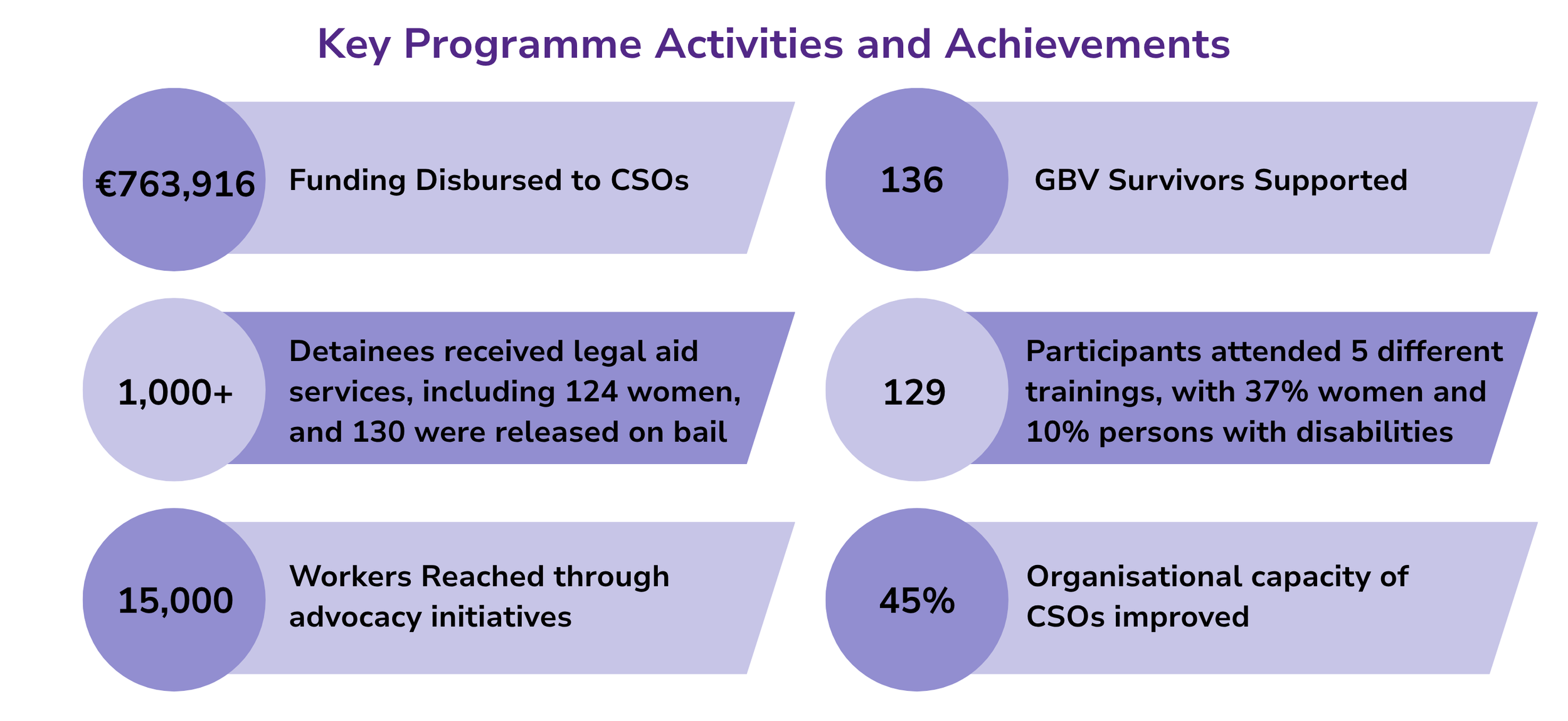
Disbursing €763,916 to CSOs during this period.
Delivering five core trainings for CSOs on financial management, RBM, MEAL, adaptive advocacy, and conflict sensitivity, reaching 129 participants, with women representing 37% of participants and persons with disabilities 10%.
These activities have already shown progress and impact:
45% of CSOs already demonstrate improved organisational capacity, with all partners showing positive trends.
Six distinct forms of adaptive capacity documented across consortia, including:
Flexible planning and sequencing.
Context‑driven geographic shifts.
Remote and hybrid implementation.
Inflation‑responsive budgeting.
Safety‑first operational decisions.
MEAL systems, financial controls, and governance processes are visibly improving across partners.
While not yet mature, CSO collaboration and dialogue mechanisms are strengthening. This is shown with 7 joint initiatives implemented; 5 more in development and early CSO–government engagements on legal aid, media law, and regulatory issues.
Despite being early in implementation, the programme shows meaningful real‑world impact, including:
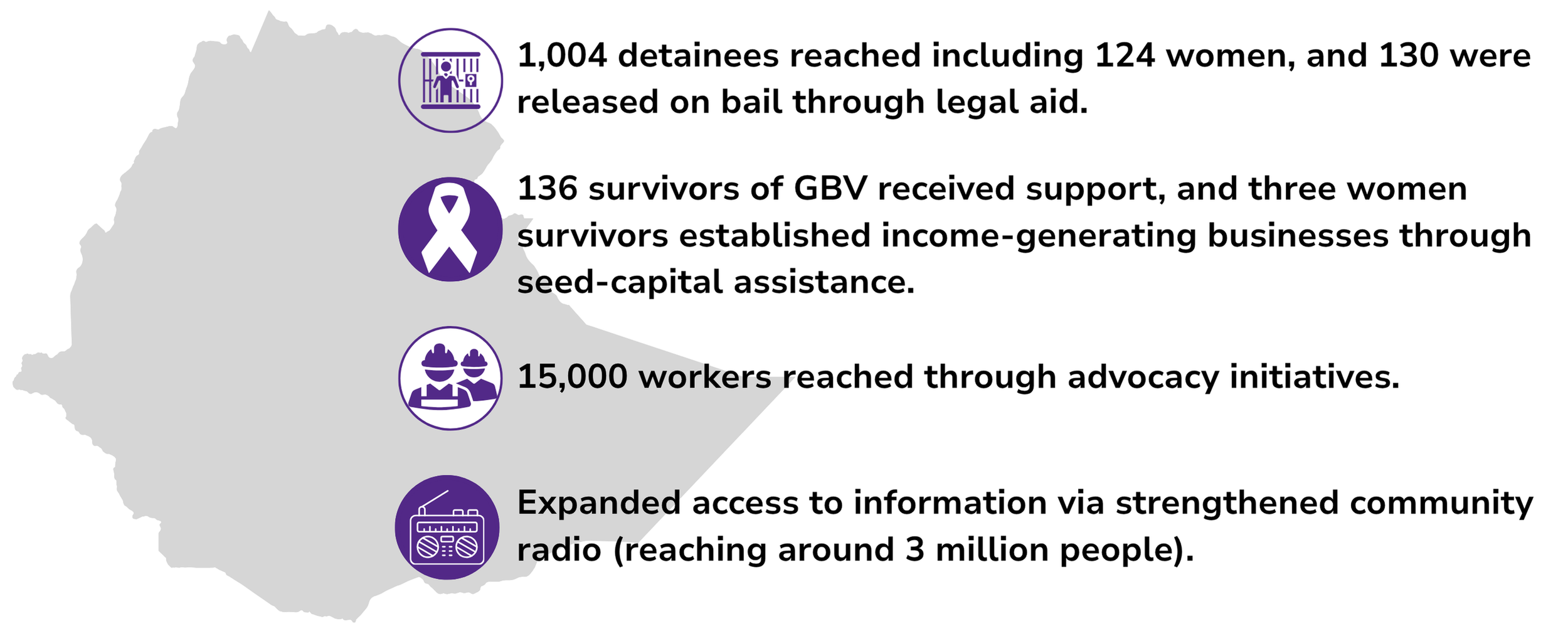
These results demonstrate the value of combining services, advocacy, and institutional strengthening.
Overall conclusion
The first biannual period successfully achieved its core objective: establishing strong systems, capacities, and relationships in a fragile and volatile context. The initial pace of projects implementation has not been as fast as predicted, but the first phase of these grants is a time when projects are winding up activities, establishing processes and their collaborations with partners, all of which takes time to embed. Despite this, CSIF II has moved decisively from setup to credible delivery — with strong foundations, early results, and clear pathways toward sustained outcomes.