MMI’s support is helping North Wollo Community Radio reach 3 million people in Northern Ethiopia.
Access to reliable information, a platform for easy open communication and an understanding of wider communities can increase understanding, co-existence and peace, and Mersa Media Institute’s (MMI)radio network and information sharing platform provides all three!
At present, misinformation is widely shared and can contribute to unnecessary conflict between communities. The radio stations, run by local community members, broadcast regular programmes on health, education, and gender rights alongside music. Because communities can often become hubs for rumours and misinformation, these programmes help improve public access to clear, accurate, and reliable information.
The radio station is providing a platform for local voices, including women, and young people, to participate in community dialogue and share their perspectives. One example of upcoming focused engagement is at North Wollo Community Radio, where they will engage the community through forum theatre, a participatory approach in which youth and women drama clubs act out short scenes reflecting local challenges, followed by interactive discussions with radio audiences. Facilitators will work closely with communities to ensure programmes address topics that matter to local people, while maintaining high editorial standards through rigorous factchecking and the dissemination of accurate, reliable information.
Until 2022, Woldia, capital of the North Wollo Zone in the Amhara Region, had a radio station in the local university, but during the civil war it was shut down and much of the equipment was looted. Mersa Media Institute (MMI), through CSIF Ethiopia support, helped set up a new radio station in Woldia starting May 2025. At this time, a general assembly meeting was held regarding the radio station, where more than 150 community members attended, showing a demand for the reestablishment of the radio station.
MMI worked with the station employees to develop policies and procedures, establishing the station as its own entity. The team were given training on project management, safeguarding and financial management, and an assessment was done on the radio’s technology and reach. In 2022, the station’s signal reached about 100 km and around 1 million people only could listen. Now with the improved technology the signal reaches over 250 km radius, allowing roughly 3 million people to listen to the programmes on food security, health and gender rights.
Since June 2025, North Wollo Community Radio’s broadcasts have increased from 4 hours per day to between 8-10 hours per day. An audience survey was conducted by MMI to understand the audience and their interests. They learned that people enjoyed the station, but they would like more broadcasts in the evening. They also learned that most listeners are female in their 30-40s, so the team is working on boosting their youth listenership.
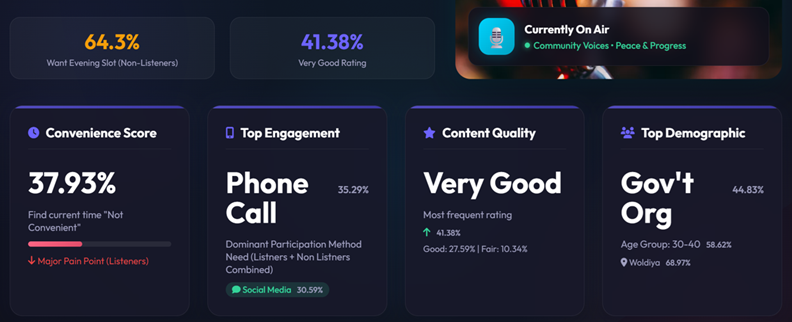
The team has created a website, and a mobile app is in development. On the app, episodes will be stored as podcasts, allowing listeners to return to previous shows and listen when suits them. MMI is working with employees so they can manage these new platforms. The current website is only available in Amharic, so the team is considering adding more local languages to improve access to information.
MMI will also build the capacity of community radio journalists through targeted training and mentorship, while also strengthening partnerships with local universities and journalism departments to support student engagement and practical learning opportunities. These efforts aim to contribute to a stronger media landscape - a free press that is based on facts and not influenced by outside factors.
Where is this happening?
This map shows all three radio stations MMI are supporting in Ethiopia
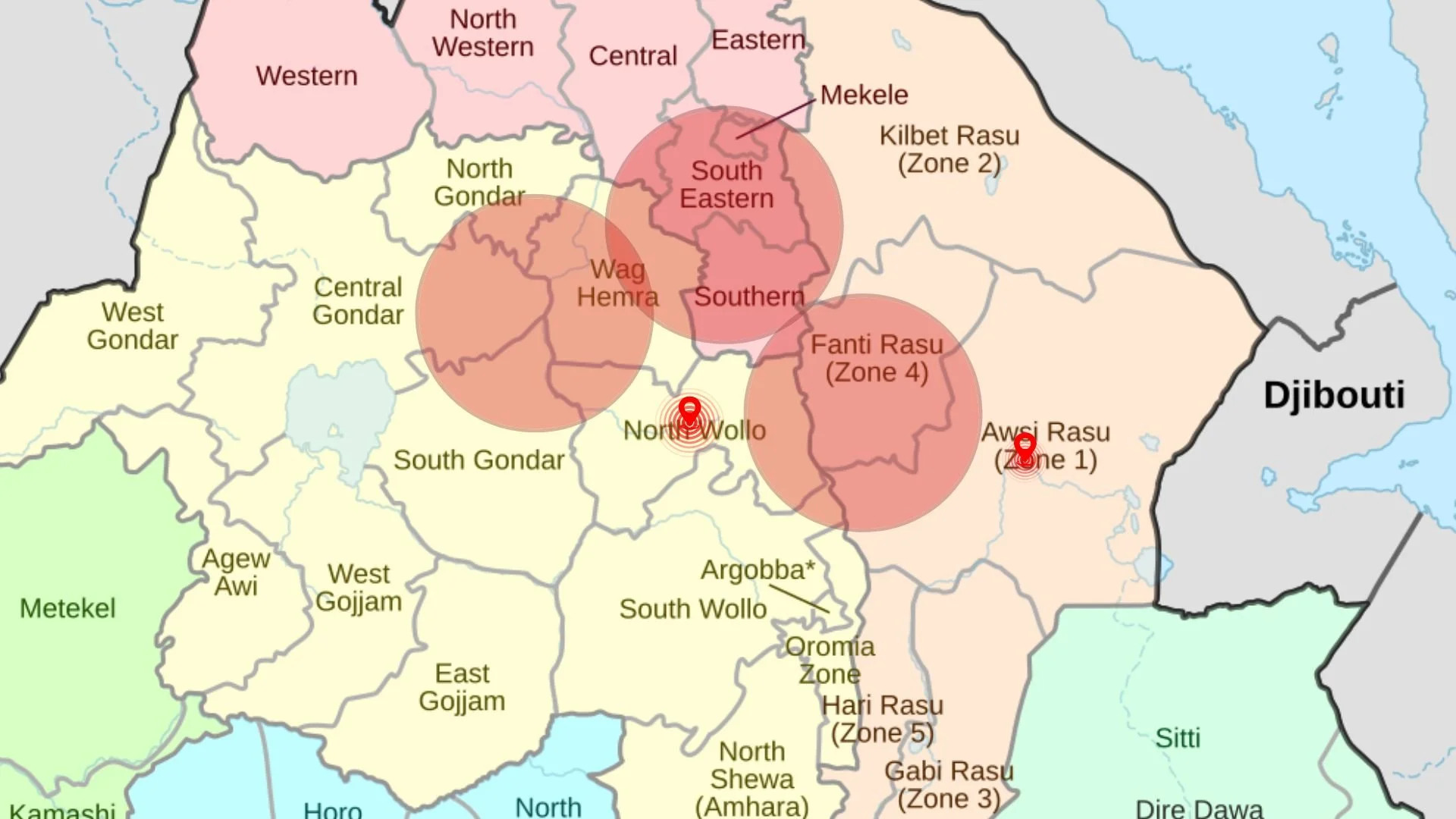
The reach of North Wollo Community Radio before expansion support
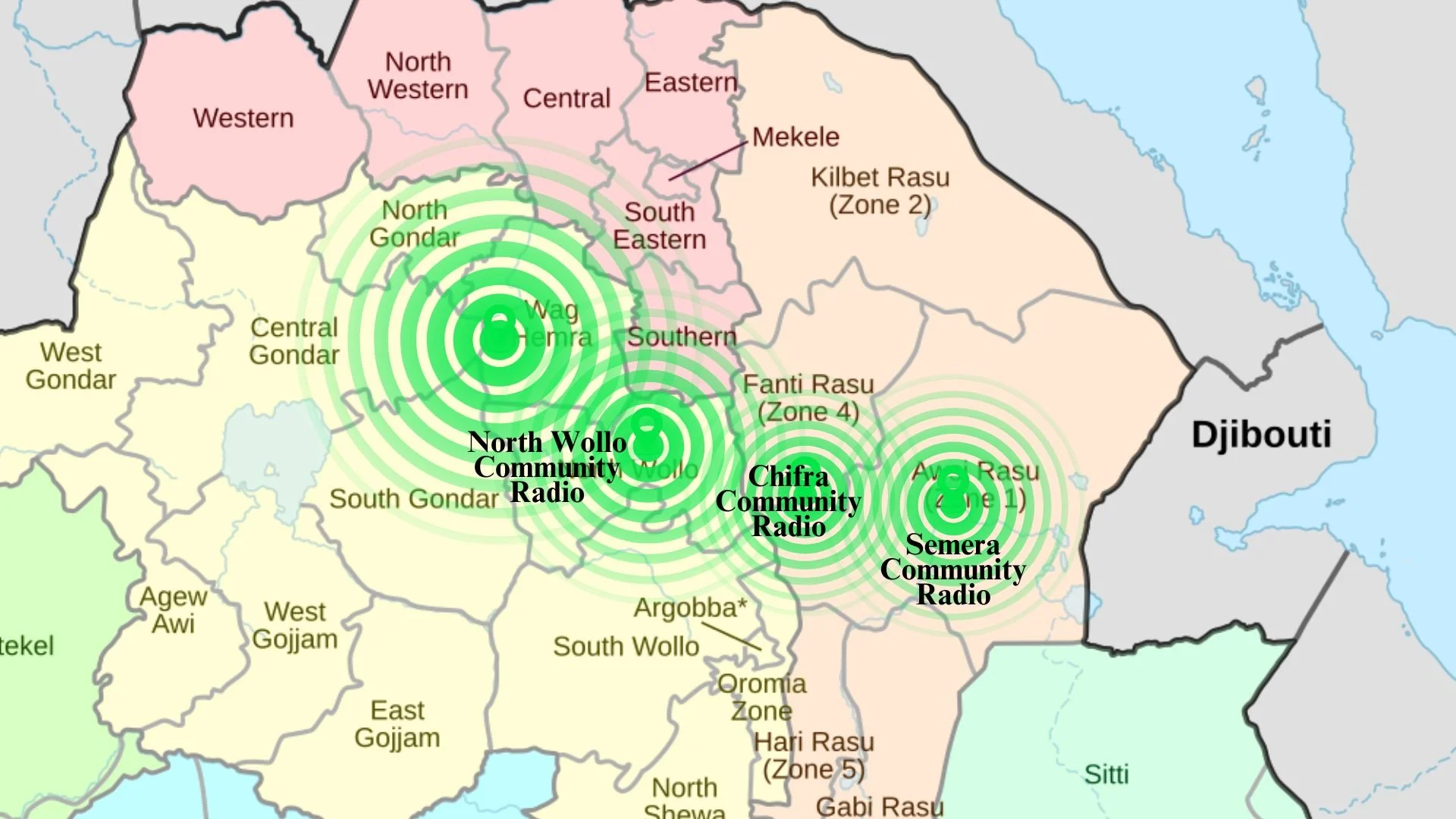
Current reach of North Wollo Community Radio after expansion support
Making sure women are heard
MMI is committed to providing a space for women and young people in the community to share ideas, challenges and solutions. It has been proven that involving women in conflict negotiations often means non-violent solutions are found. Giving women and young people the tools and information to support the resolution of issues can build peace.
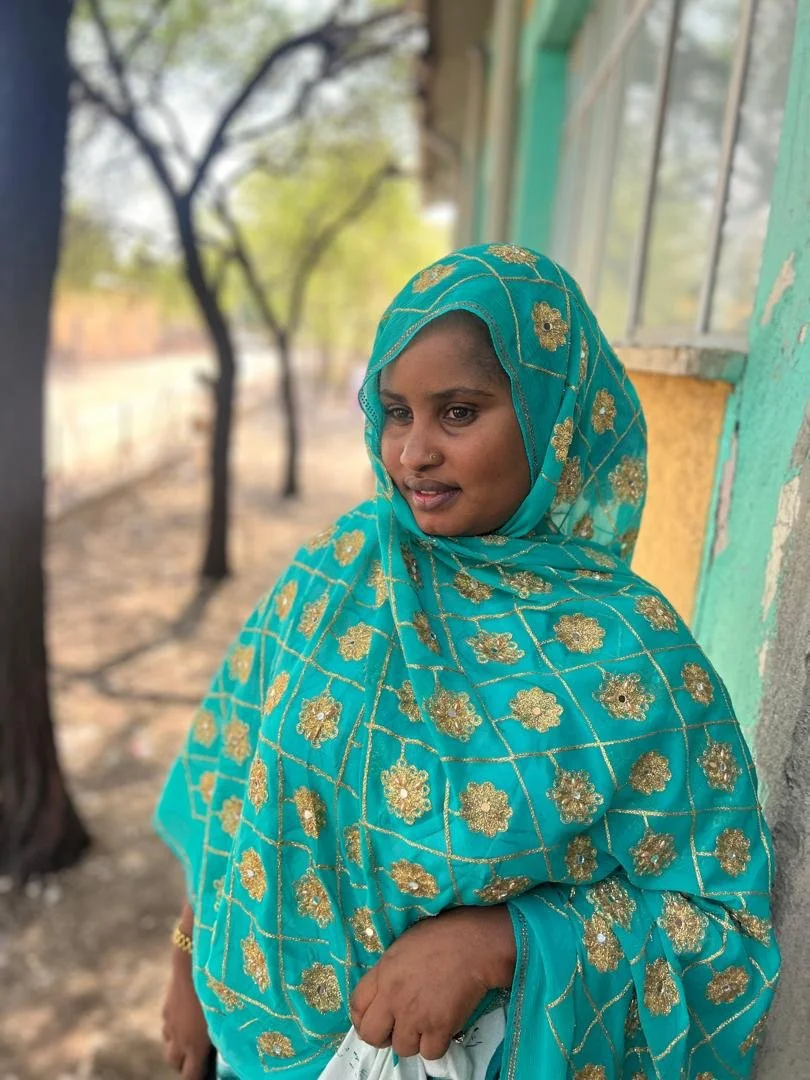
The radio station in Semera, Afar Region - Semera Community Radio, is a good example: when support began to the existing station team at the start of 2026, the station had limited capacity and was mainly supported by volunteers. MMI reviewed what support Semera Community Radio needed. A new antenna was required to boost the number of people that could listen and the staff needed more regular volunteer support to improve the running and quality of the broadcasts. MMI coordinated a partnership with a local university, specifically with the Department of Journalism and Communication, for female students to join the team through work experience placements.
Due to a shortage of staff, the radio station building had become run down and required repair. Female students, together with their teachers, stepped in to clean and restore two rooms, creating a functional space for the station. Beyond serving staff needs, the space also provides a safe and supportive environment where female students can work, learn, and engage with media activities.
The future
MMI will continue to develop and build community radio stations across Northern Ethiopia, supporting the staff to run these stations and deliver high quality fact-checked information with journalistic integrity. This will help to build the media landscape in Ethiopia, providing the population with access to accurate information. This in turn will support peacebuilding and understanding between communities in the region. Watch this space for future updates.
How can I get involved?
If you would like to support the work of MMI or get involved in your local community radio station, please reach out via email: info@csinnovationfund.org.