For generations, people across Afar region have relied on Dagu, a traditional system of communication through which news, information, and stories travel from person to person. It remains one of the oldest and most effective community information networks in rural Ethiopia. Despite this strong tradition of information sharing, many communities across the Afar region have remained disconnected from formal media systems. In Chifra, a small town in Zone 1 of Afar region, communities and their leaders have long worked toward establishing a local community radio station. Among those who recognized the need for a trusted local source of information was Ali Arba, a respected leader from the Arabta clan of Afar.
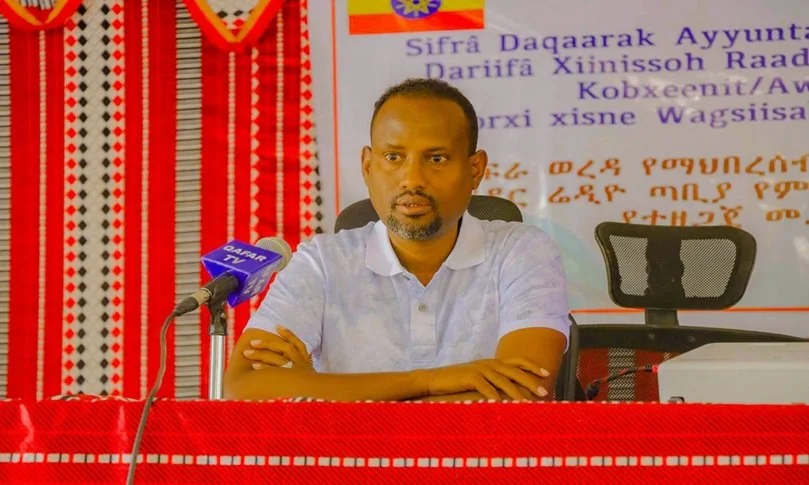
Ali Arba, Chifra Community Leader (L)
During the conflict in the Northern Ethiopia in 2022, which expanded into Chifra, Ali watched residents depend on military communication systems for updates on food distribution, security, and other essential information. The experience demonstrated just how vital trusted communication was during times of crisis and strengthened his belief that Chifra needed a permanent, community-owned radio station.
It was not his vision alone.
Women, young people, community elders, and local leaders all shared the same aspiration: to create a platform where
local voices could be heard, community concerns openly discussed, and reliable information could reach people often left beyond the reach of mainstream media.
Today, that shared dream is becoming a reality.
MERSA Media Institute (MMI), with the support of Civil Society Innovation Fund (CSIF) Ethiopia, worked closely with local stakeholders to organise a General Assembly that brought together the local community representatives, youth groups, women leaders, and other key actors.
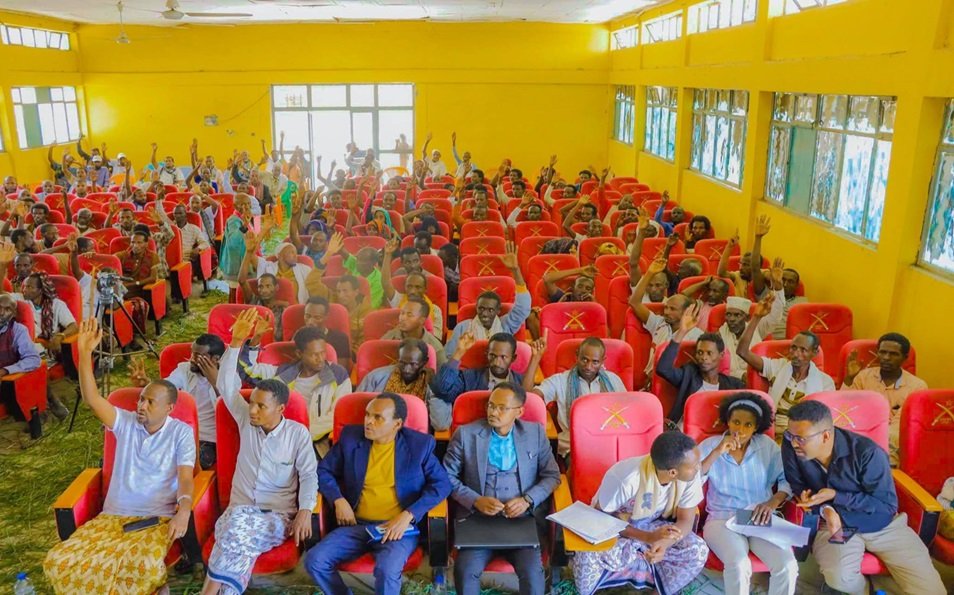
A general assembly of local communities in Chifra, Afar on democratic voting process to establish their community radio
The community came together with a strong sense of need and ownership, showing their commitment with active participation to shaping an institution that reflects their priorities and will serve future generations.
Among them was Amina Awol, a 28-year-old youth representative who represents women in the General Assembly and now serves as a member of the Board. For her, the importance of community radio extends beyond access to information. She sees it as a platform that can amplify the voices of women and young people, strengthen their equal participation in the community, and ensure they are included in conversations that shape their future.
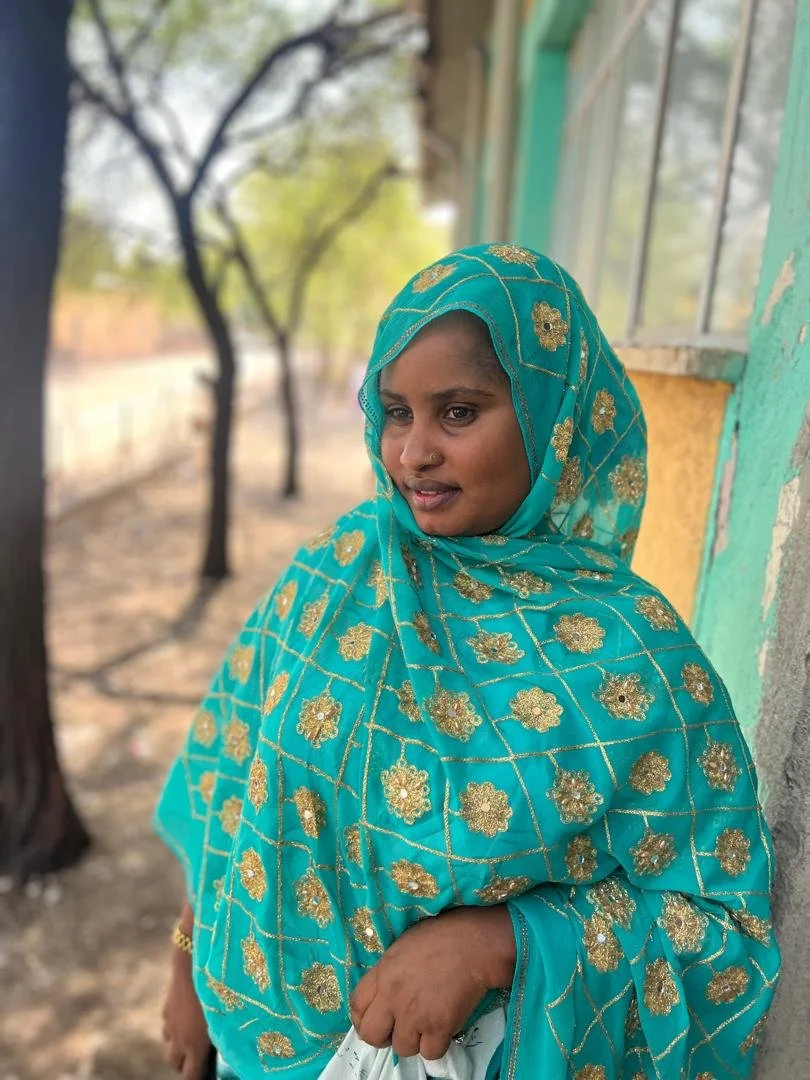
Amina Awol, Women's Representative and Board Member (R)
"Community radio gives women and young people a voice. It creates opportunities for us to share our experiences, access important information, and participate more actively in decisions affecting our communities. It strengthens our connections with one another and helps ensure that our perspectives are heard."
Following the assembly, MMI provided extensive technical support to establish the organisation, secure registration as a civil society organization, and navigate the licensing processes required for broadcasting.
Today, Chifra Community Radio holds both a CSO registration certificate and a broadcasting license, formally establishing it as a community-owned media institution.
With a 2-kilowatt new broadcasting license and an estimated 200 km radius coverage, the station is positioned to provide timely and reliable information access to more than 1.5 million people, reaching many who previously had no access to radio services.
What makes Chifra Community Radio particularly significant is its geographical location within a much larger media ecosystem emerging across the bordering areas of Afar and Amhara regions, enabling cross-border news and information exchange.
For families living across this vast area, the community radio provides and improves access to reliable information on health, education, food security, livelihoods, governance, and local development.
Approximately 70 km northwest of Chifra lies the town of Woldia in the North Wollo Zone of Amhara Region. Based at Woldia University, North Wollo Community Radio has long served as a trusted source of information for communities across North Wollo and neighbouring areas of the Amhara, Afar, and Southern Tigray regions.
The civil war, however, left the institution severely weakened. Governance structures became inactive, broadcasting licenses expired, and operations were disrupted. For more than three years, communities that had relied on the station experienced a significant reduction in access to local broadcasting and reliable information.
With MMI's support through Civil Society Innovation Fund (CSIF) Ethiopia programme, the North Wollo Community Radio has undergone a remarkable institutional recovery.
Its technical capacity has expanded significantly. Broadcasting power increased from 1 kilowatt to 3 kilowatts, complemented by the establishment of a new electric power supply from the Lalibela town. The radio coverage expanded from 100 KM radius to 250 KM, while the estimated population served within its vernacular broadcasting area doubled from 1.5 million people to nearly 3 million.
What was once primarily a local station now reaches across regional boundaries into parts of Afar and Southern Tigray, serving as an important bridge between diverse communities.
Institutionally, the organisation has also regained its footing. It successfully renewed both its CSO and broadcasting licenses, convened its first General Assembly in years, elected a new Board of Directors, and established new project and finance teams to strengthen organisational management and long-term sustainability.
This reflects a broader vision championed by Henok Semaegzer Fente, Founder and Executive Director of MMI. Drawing on more than 15 years of experience as a journalist and in supporting the establishment and strengthening of community radio stations across Africa, he believes that community radio is one of the most powerful tools for ensuring that underserved communities have access to trusted, reliable and locally relevant information.
“Community radio is not simply about broadcasting information. It is about creating institutions that communities own and trust—platforms where people can access reliable information, participate in dialogue, and shape their own development. Our vision is to see every community connected through strong, sustainable community media.”
Through CSIF Ethiopia support, the work in Chifra and Woldia community radio stations represents something much larger than the establishment or restoration of individual radio stations. Together, they are gradually creating an interconnected information corridor stretching across regions that previously contained significant gaps in information access.
Historically, large portions of the border areas between Amhara and Afar regions experienced limited access to media.
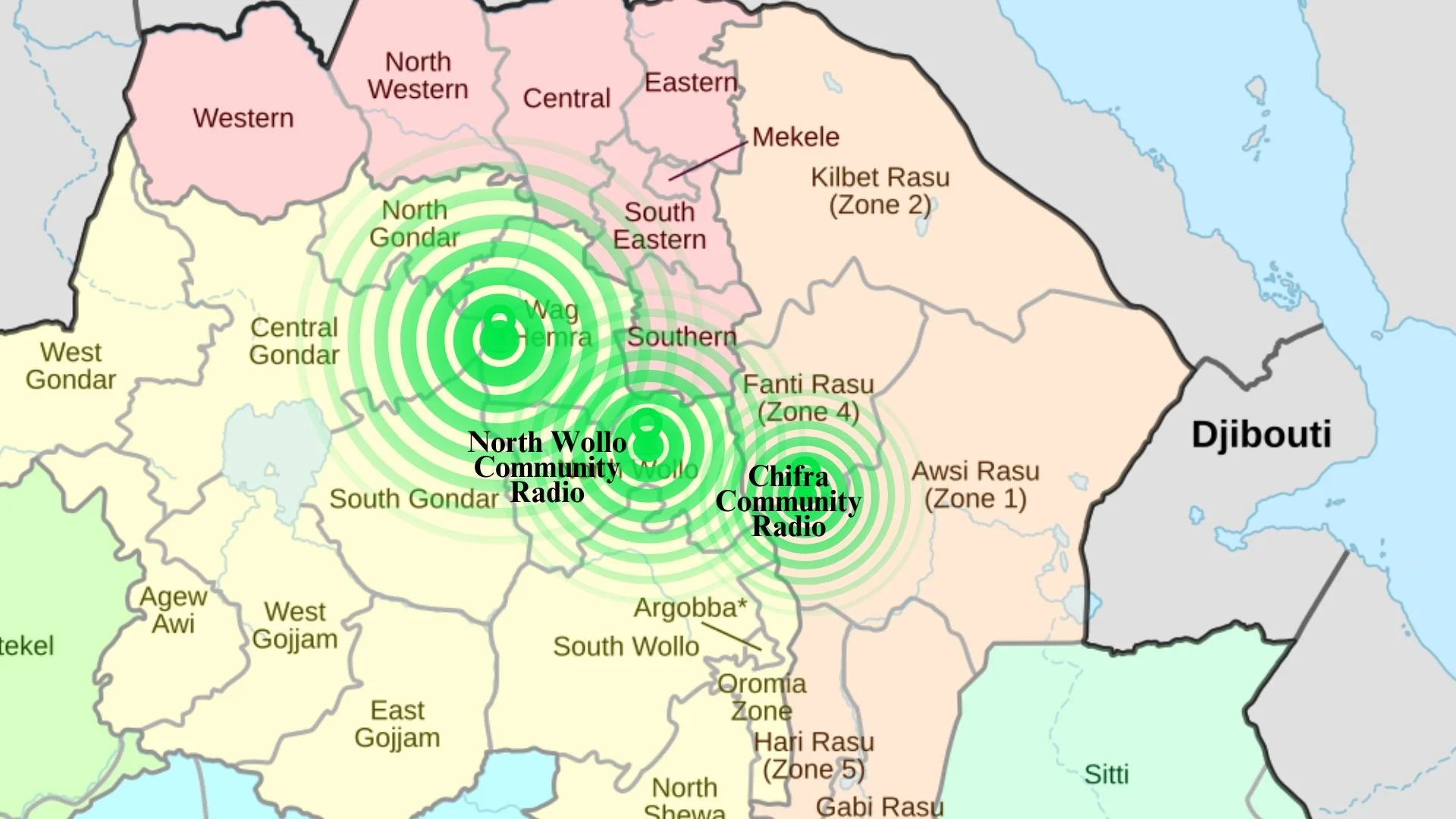
Current reach of North Wollo Community Radio and Chifra Community Radio
Today, North Wollo Community Radio reaches outward from Amhara, while Chifra Community Radio extends across Afar. Together, they significantly improve the information access that once existed between neighbouring communities, creating a continuous flow of locally relevant information across a broad geographical area.
Taking together, these initiatives demonstrate that community radio is about far more than transmitters, antennas, or broadcasting licenses. It is about creating platforms where communities can access information, share experiences, participate in cross-cultural dialogue, and engage beyond boundaries.
It is about ensuring that women and young people have opportunities to shape conversations that affect their futures.
Ultimately, it is about transforming places once considered information dry zones into connected communities where knowledge, ideas, and opportunities can flow freely.
All photos by MERSA Media Institute